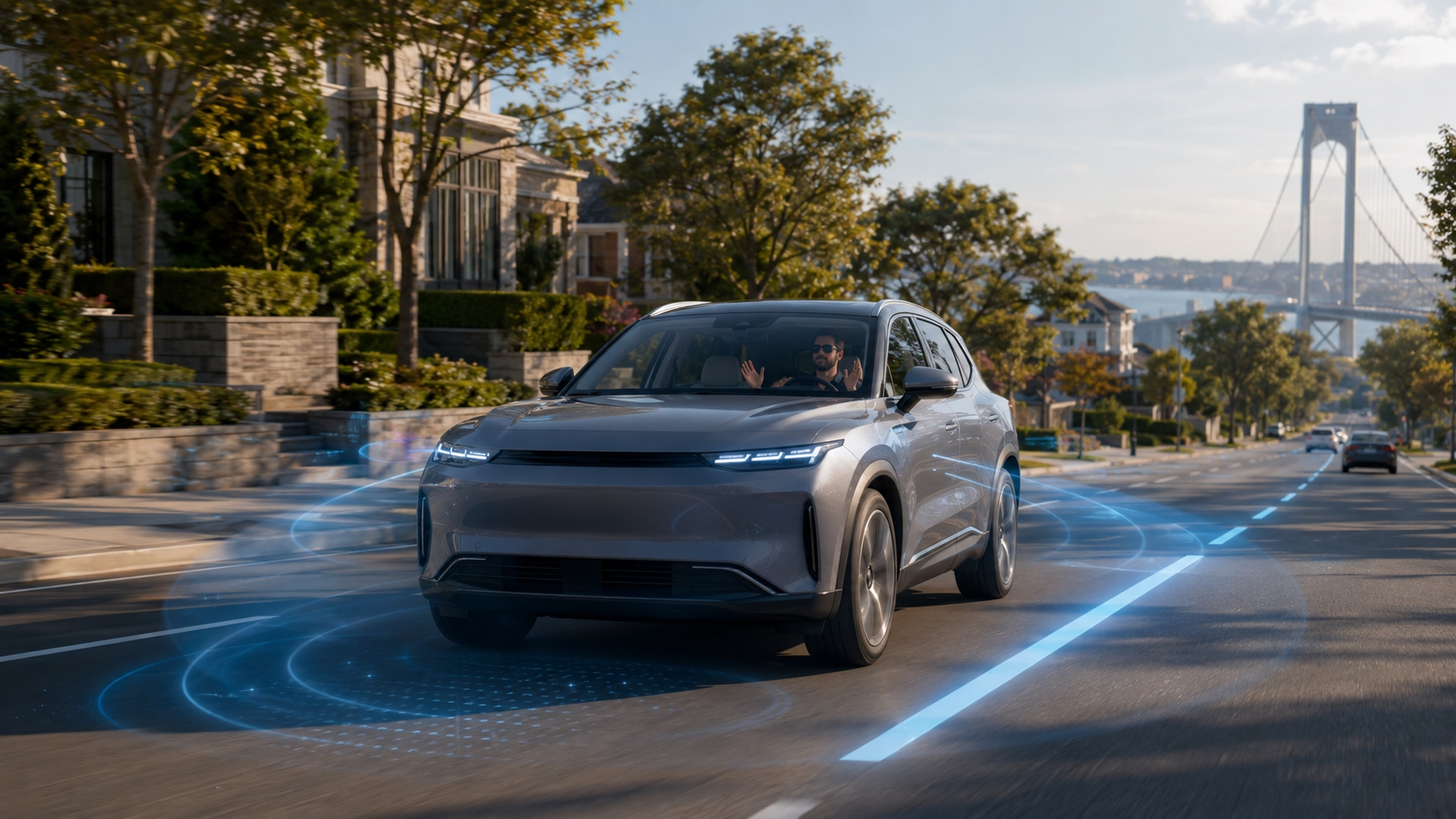
If you’ve shopped for a car lately, you’ve heard the phrase everywhere: full self driving. It’s on the news, in car ads, and all over social media. But there’s a big gap between the marketing and the reality. So what does full self driving actually mean in 2026—and can you really buy a car that drives itself today? Here’s the clear, no-hype answer, plus the models that get you closest. (It’s also the question our team at iDeal Auto Sales of Staten Island hears almost every week.)
The short version: the technology is real and improving fast, but every car sold to consumers today still needs a fully attentive human behind the wheel. Understanding the difference will save you money, keep you safer, and help you pick the right vehicle.
What “Full Self Driving” Really Means (and What It Doesn’t)
Here’s the part the ads usually skip. According to the National Highway Traffic Safety Administration (NHTSA), “There is no vehicle currently available for sale that is fully automated or ‘self-driving.’ Every vehicle currently for sale in the United States requires the full attention of the driver at all times for safe operation.”
That’s straight from the federal regulator. So when you see “Full Self-Driving” as a feature name, it’s a brand name for a driver-assistance package, not a description of a car that legally and safely drives itself with no one paying attention.
The reason this matters: treating advanced driver assistance like true autonomy is exactly how accidents happen. These systems are genuinely helpful for reducing fatigue and adding a safety net, but they are co-pilots, not chauffeurs.
The 6 Levels of Driving Automation, Explained
Engineers and regulators measure self-driving capability using a six-level scale created by SAE International’s J3016 standard and used by NHTSA. Here’s the plain-English version:
| Level | Name | Who’s really driving? | Available to buy today? |
|---|---|---|---|
| 0 | No automation | You do everything (system only warns) | Yes |
| 1 | Driver assistance | You drive; system helps with steering or speed | Yes |
| 2 | Partial automation | You drive & monitor; system handles steering and speed | Yes — this is where “full self driving” packages actually sit |
| 3 | Conditional automation | System drives, but you must take over when asked | Barely (very limited) |
| 4 | High automation | System drives within mapped areas; you’re a passenger | Robotaxis only, a few cities |
| 5 | Full automation | Car drives everywhere, all conditions | Does not exist |
Here’s the key takeaway most drivers miss: the features marketed as “full self driving” today are Level 2. The car can steer, brake, and accelerate on its own in many situations—but legally and practically, you are still the driver. You can read the official breakdown in NHTSA’s Levels of Automation guide.
Is Full Self Driving the Future? Where Things Stand in 2026
Yes—but “the future” is still arriving in stages. The most famous example is Tesla. As of 2026, Tesla’s system is officially called “Full Self-Driving (Supervised).” On its own Full Self-Driving (Supervised) page, Tesla states plainly: “None of these advanced driver assistance features make your Tesla vehicle fully autonomous or replace you as the driver.” A truly unsupervised version for personally owned cars has been promised for years and, as of mid-2026, still hasn’t arrived for consumers.
Meanwhile, genuine Level 4 “robotaxis”—cars with no driver, operating in a fixed service zone—are running in a handful of U.S. cities. But those are tightly geofenced fleet vehicles, not something you park in your Staten Island driveway.
So the honest 2026 answer is: full self driving is coming, the assistance tech in new cars gets better every year, and you can already enjoy a huge amount of it. Just don’t expect to nap on the Verrazzano anytime soon.
Which Cars Have Full Self Driving? Top Models for 2026
You don’t need to wait for a sci-fi robotaxi to get most of the benefit. Plenty of vehicles—including ones on our lot—offer impressive Level 2 driver-assistance suites. Here are standouts worth a test drive:
Tesla (Model 3, Model Y, Model S, Model X) — The headline act. Tesla’s FSD (Supervised) handles lane changes, turns, and highway driving under your supervision, available as a subscription. It’s the closest mainstream experience to hands-light driving—within the Level 2 limits above.
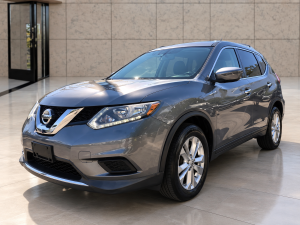
2025 Nissan Rogue with ProPILOT Assist 2.0 — One of the best values in semi-autonomous tech. ProPILOT Assist 2.0 combines adaptive cruise control, lane-centering, and traffic-sign recognition for a genuine co-pilot feel in stop-and-go NYC traffic. A favorite among Staten Island families.
All-electric 2025 Toyota bZ4X — Comes standard with Toyota Safety Sense 3.0, including a Pre-Collision System, Lane Departure Alert with Steering Assist, Dynamic Radar Cruise Control, and Emergency Steering Assist—plus zero-emission driving and up to ~300 miles of range.
2025 BMW X3 — BMW’s Driving Assistant package brings adaptive cruise, lane-keeping, and highway assist to a premium SUV that’s genuinely fun to drive.
Subaru models with EyeSight — A consistently well-reviewed, camera-based safety suite that’s standard on most modern Subarus, several of which rotate through our used car inventory.
Want a car with a true “self-driving mode” on the highway? A few systems go a step further and let you take your hands off the wheel in approved conditions, while a camera makes sure your eyes stay on the road:
GM Super Cruise (Cadillac, Chevrolet, GMC) — Hands-free driving on compatible, pre-mapped highways. A driver-attention camera checks that you are watching the road, and the system hands control back to you when conditions change. It is still Level 2, so you remain the driver.
Ford BlueCruise (Ford and Lincoln) — Hands-free driving on pre-mapped divided highways Ford calls “Blue Zones,” available on models such as the F-150 and Mustang Mach-E. Like Super Cruise, it requires your eyes on the road at all times.
Mercedes-Benz DRIVE PILOT — The rare Level 3 system sold to consumers in the U.S. On select S-Class and EQS models, it can drive in certain highway traffic conditions in the few states that have approved it, and you must take over when the car asks. It is the closest thing to “eyes-off” driving you can buy today.
Tesla for Sale in Staten Island: What to Know Before You Buy
Searching for a Tesla for sale in Staten Island? A few honest pointers. First, “Full Self-Driving” on a Tesla is typically tied to the owner’s account—if you buy a used Tesla, FSD capability may or may not transfer, and many drivers access it as a ~$99/month subscription instead of a one-time purchase. Always confirm the FSD status before you buy a pre-owned Tesla.
Second, an EV like a Tesla or the Toyota bZ4X changes your cost math: no gas, lower maintenance, but you’ll want a charging plan for apartment or street parking, which is common in our area. If you’re cross-shopping a Tesla against other tech-forward vehicles, our team is happy to walk you through the trade-offs and help you find or source the right one. Just contact our Staten Island team and tell us what you’re after.
How to Shop Smart for a Self-Driving-Ready Car
A great driver-assistance system is only as good as its safeguards. The Insurance Institute for Highway Safety (IIHS) now rates how well partial-automation systems keep drivers engaged—using driver-attention monitoring, escalating alerts, and fail-safes. Notably, in IIHS testing most systems did not earn top marks, so the brand with the flashiest name isn’t always the safest. When you shop, ask three questions:
- Does it monitor driver attention (eyes and hands), not just nag occasionally?
- What exactly does the system do—lane-centering, adaptive cruise, automatic emergency braking?
- Is the feature standard or a paid add-on/subscription, and does it transfer if the car is used?
A few minutes of homework here is worth thousands in long-term value and peace of mind.
New & Used Car Sales in Staten Island at iDeal Auto
Whether you want the latest driver-assist tech or a dependable, budget-friendly ride, you’ve got options close to home. For the newest models and lease offers, check our new car sales in Staten Island. Prefer to maximize value? Our certified used car inventory has 350+ vehicles across all makes and models, many with Level 2 safety suites already built in.
When you find one you like, you can get pre-approved for financing in minutes with no impact to your credit score, estimate your monthly cost with our payment calculator, and even lock in a real trade-in value on your current car. Stop by iDeal Auto Sales at 2083 Hylan Blvd, Staten Island, NY 10306, or call (718) 898-8618 to take one for a spin.
Frequently Asked Questions
What cars have self-driving mode? No car sold to consumers today drives itself everywhere. The closest options are Tesla’s FSD (Supervised), GM Super Cruise, and Ford BlueCruise (hands-free on mapped highways, Level 2), plus Mercedes-Benz DRIVE PILOT (Level 3 in limited conditions and states). Many everyday models, like the Nissan Rogue, Toyota RAV4, and Subarus with EyeSight, offer adaptive cruise with lane centering.
Is full self driving legal in New York? Driver-assistance systems (Level 2) like adaptive cruise and lane-centering are legal to use, but New York law still requires a licensed, attentive driver in control of the vehicle at all times. There is no consumer car you can legally let drive itself unattended.
Can I buy a car that fully drives itself in 2026? No. Per NHTSA, no vehicle sold to consumers is fully self-driving. The most advanced systems available—including Tesla’s “Full Self-Driving (Supervised)”—are Level 2 and require your full attention.
Does “Full Self-Driving” transfer when I buy a used Tesla? Not always. FSD capability is often tied to the previous owner’s account or a monthly subscription. Always verify the FSD status in writing before purchasing a pre-owned Tesla.
Which affordable cars have the best self-driving-style features? The Nissan Rogue (ProPILOT Assist), Toyota models with Safety Sense, Honda with Honda Sensing, and Subaru with EyeSight all offer strong Level 2 driver assistance at mainstream prices. Many are available used at iDeal Auto Sales.
Are self-driving features safe? They can add a valuable safety net, but only when used as designed—with your eyes on the road and hands ready. The IIHS recommends choosing systems with strong driver-attention monitoring.
Ready to experience the latest driving tech for yourself? Browse our inventory or contact iDeal Auto Sales of Staten Island today.